Heavyweight or oversized? Choose fabric weight and fit independently
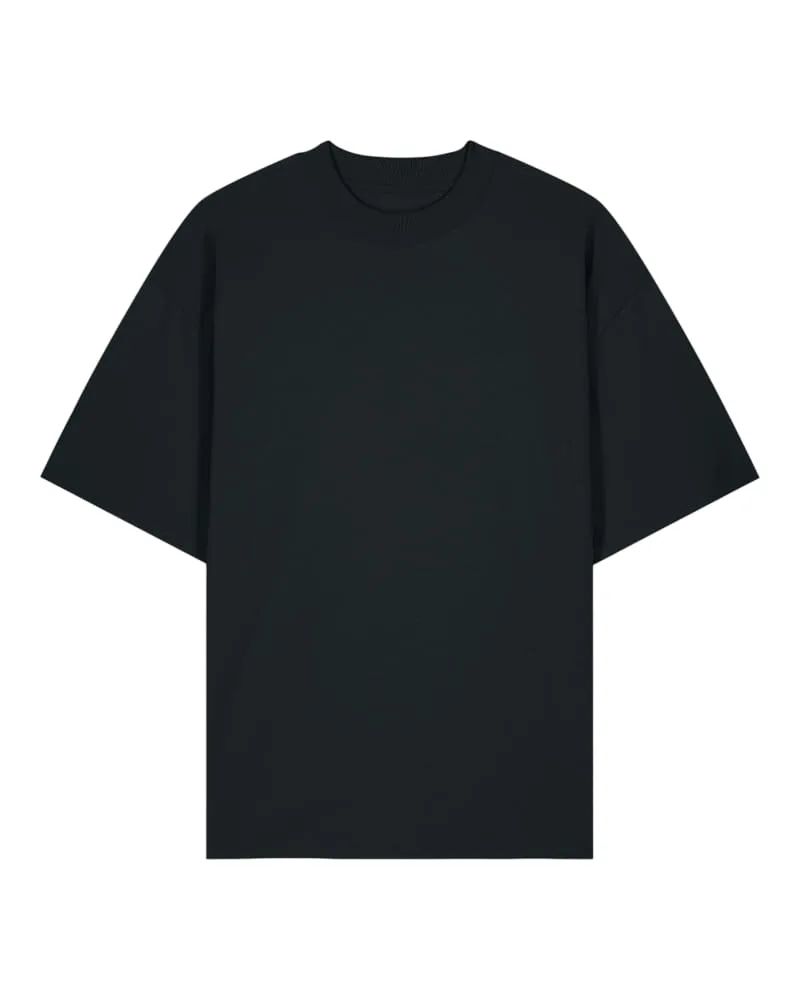
Heavyweight and oversized describe different T-shirt properties: heavyweight refers to a heavier fabric, while oversized describes a deliberately roomy cut. An oversized shirt does not therefore have to use particularly heavy fabric. Compare fabric weight in grams per square metre (g/m²) and garment measurements separately before choosing a model for your collection.
This becomes useful when your first samples feel quite different. One hangs loosely around the body; another feels more substantial in the hand. Instead of calling both “heavyweight”, make a deliberate choice about silhouette, fabric feel, and intended use. Here is a practical way to prepare that decision.
What does 200 g/m² mean for a T-shirt?
A specification of 200 g/m² means that one square metre of the fabric weighs 200 grams. It does not describe the total weight of a finished T-shirt. Two shirts in different sizes can have the same fabric weight specification while weighing different amounts overall.
Use the number to compare the products on your shortlist. It cannot replace handling a sample or trying it on. A higher figure alone does not establish better quality, greater durability, or a more comfortable fit. Look at the actual product: its surface, seams, collar, drape, and behaviour after the recommended care.
Describe the actual fabric weight and fit in your store: state the verified manufacturer specification and explain the cut using the model information and your sample. If you use the term “heavyweight”, explain what it means for that particular product. The label does not replace a fabric-weight figure or a clear description of how the garment feels when worn.
Is choosing a larger size the same as choosing oversized?
No: sizing up and choosing an oversized cut are different selection decisions. An oversized model is deliberately shaped to provide extra room. Examine body width, shoulder position, sleeve length, and overall length. Choosing a larger size in a differently cut shirt does not automatically produce the same proportions.
Ask where you want the extra volume to appear. Broader shoulders might support a relaxed, straight silhouette, while substantially more body length could create a different effect. Decide on the look first, then check the measurements of the model you are considering.
Also record how your audience is likely to wear it: on its own, beneath an open jacket, or tucked into trousers. These give you specific fitting situations to assess. They are more useful than a vague judgement such as “looks premium”.
Two verified models to compare
Stanley/Stella describes the Blaster 2.0 STTU959 as a 200 g/m² T-shirt in 100% organic cotton, with an oversized fit and dropped shoulders. It provides a concrete example of a roomy cut; the figure of 200 does not itself confer a universal heavyweight classification.
The manufacturer lists the Creator 2.0 STTU169 at 180 g/m² with a Medium Fit. Always check composition for your chosen variant: the manufacturer lists a different blend for Heather Haze. Avoid applying a general model description to every colour without checking.
These details were checked on 15 October 2026. They describe product characteristics, not current stock, pricing, or delivery commitments.
Write a brief with two separate decisions
Before ordering samples, write down your requirements under two headings. Under “fit”, describe the silhouette; under “fabric”, describe the experience you want. Here is an original example brief: “Fit: room through the shoulders and body without excessive length. Fabric: the feel should suit everyday wear in the sample test.” Record the manufacturer’s fabric weight separately; that measurement cannot establish fabric feel on its own. This leaves the test to determine which model meets your brief.
Use a simple working matrix:
| Decision | Question during fitting | What to record |
|---|---|---|
| Shoulders and sleeves | Does the shoulder line sit where intended? | Front and side photographs |
| Body width and length | Does the silhouette work when moving? | Measurements and a short wear note |
| Fabric feel | Does the handle suit the intended use? | A description rather than a quality ranking |
| Design appearance | Does the placement work with this fit? | The same artwork on both samples |
Assess each field independently. An appealing cut should not obscure an unsuitable fabric feel, and a pleasant fabric should not excuse a length that fails your brief.
Test the interaction with your design
Where possible, order the shortlisted models in comparable colours. Use the same artwork, planned print size, and deliberately chosen placement. If you change the design, colour, and fit simultaneously, it becomes difficult to work out what caused a particular reaction.
Check the shirt while standing, sitting, and raising your arms. Notice whether folds obscure important parts of the design. Photograph the same views under similar lighting. Wash the samples according to their care instructions, then record measurements, shape, and print appearance again. Your findings apply to those samples and conditions, rather than automatically covering every variant.
Ask testers for observations before asking for a favourite. “The sleeve sits lower on my arm” gives you a useful detail. “I like this one” gives you a preference that needs context. Record both without turning a small sample exercise into a claim about your entire audience.
Explain the choice clearly in your store
Carry the observable details into your product page: model, fabric weight, fit description, relevant measurements, and helpful information about how it wears. Keep personal impressions separate from manufacturer specifications. Saying “chosen for our collection because of its broad silhouette” explains your decision without claiming superiority.
Start with one clear combination rather than immediately offering every possible weight and fit. If you later add a second model, give it a distinct role. Customers can then choose between understandable fabric characteristics and silhouettes, instead of two interchangeable heavyweight promises.
© Stanley/Stella. Manufacturer product image: Blaster 2.0 STTU959, Black C002.