Choosing a Print-on-Demand Provider: 7 Criteria for Your Brand
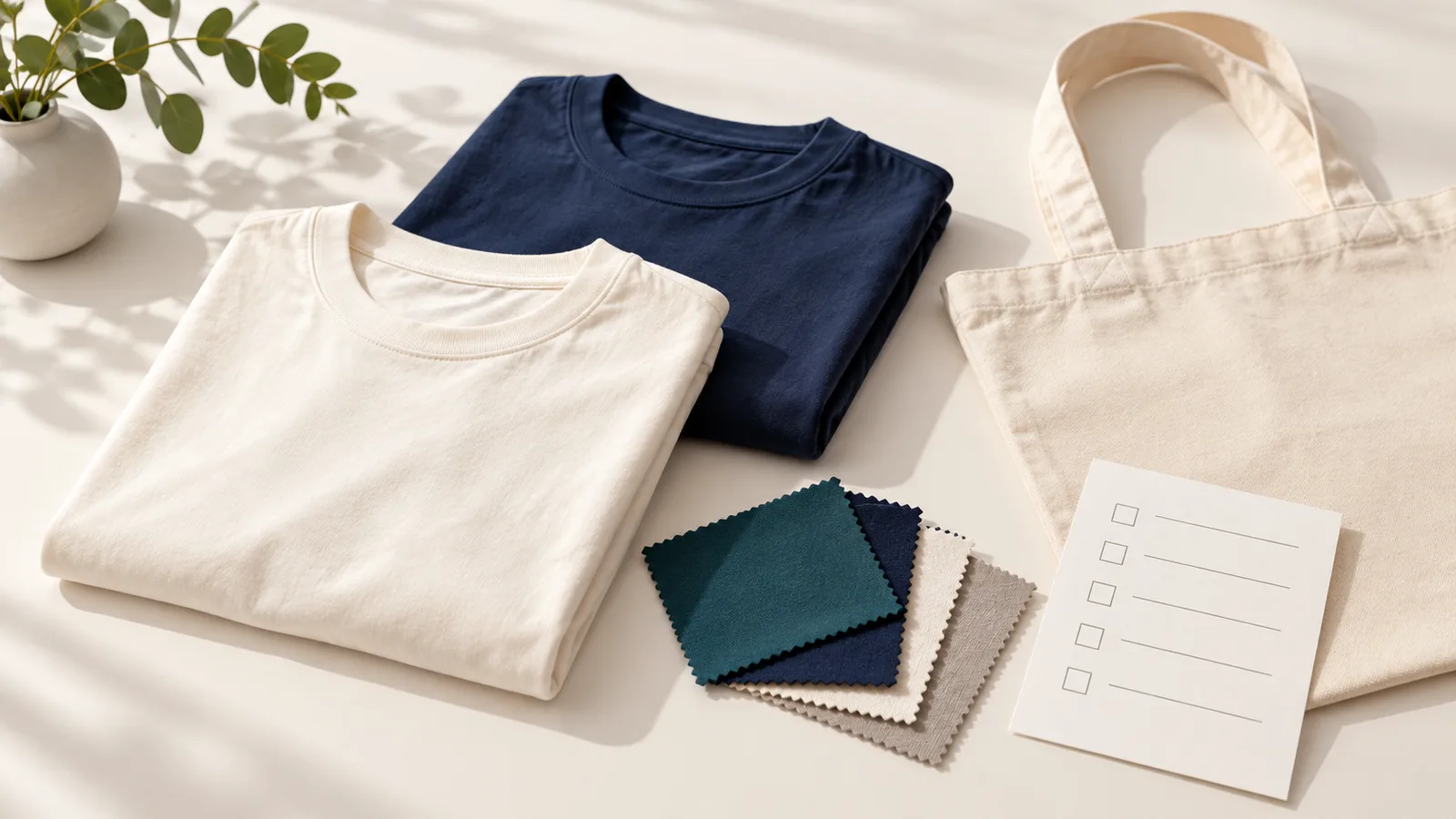
Your design is ready, and your store is taking shape. Now you need a print-on-demand provider that fits your products and the way you work. Your choice affects everything from how a T-shirt feels and when an order arrives to how much you keep from each sale.
With print on demand, products are decorated with your design only after an order is placed. You do not have to buy your finished collection in every size and colour in advance. Careful preparation still matters, though. These seven criteria help you compare POD providers based on what your store needs.
1 Start with your audience and product range
First, write down what you want to sell, who you want to sell it to, and which countries you plan to serve. A streetwear brand focused on heavyweight hoodies needs different products from an illustration store selling posters and mugs.
Choose a few core products for your launch. Note the material, fit, sizes, colours, and decoration method you need for each one. This list gives your comparison a clear focus: can a provider support the collection you have in mind? For example, browse Shirtee.Cloud's print-on-demand products and compare the range with your list.
Plan your sales channel first: for example, an Etsy shop for original illustrations or an Amazon listing for a small merchandise collection. Shirtee.Cloud handles production and shipping for POD orders. For your plan, check the channel rules separately from the way your specific order data will reach your fulfilment partner. A shop idea alone confirms neither a native integration nor approval to sell the products on that marketplace.
2 Check quality with your own designs
Order samples of your key products before promoting them. Use the designs you intend to sell. Fine line art places different demands on a print than a large, solid graphic.
Check each sample:
- How do the fabric and print feel?
- Do the fit and measurements match the product description?
- Are small details clear, and is the design positioned correctly?
- How does the product change after washing according to the care instructions?
Photograph the samples and record your observations. This gives you a consistent basis for comparing providers. If your range includes different materials or decoration methods, test each important combination separately.
3 Compare the full cost of print on demand
The product price is only part of your calculation. Work out the cost of a typical shopping cart, including decoration, shipping, any branding surcharges, and fees charged by your store platform and payment provider. You also need room for discounts, advertising, and handling customer questions.
Use the same cost basis for every quote. Compare identical product variants, print areas, and destination countries. Also check whether particular features require a paid plan.
Calculate at least one single-item order and one cart containing several items. This helps you see how extra products or separate shipments affect your costs. Record when you have to pay the provider and when the payout from your store reaches you, too.
4 Test the store integration through the full order process
A suitable integration can save you a lot of manual work. Look closely at which steps it actually supports for your store platform. Shirtee.Cloud's Help Center provides current information about supported store integrations.
Create a test product with several variants. Then check the product details, images, sizes, and prices in your store. Place a test order and follow it through to the shipping notification.
Use these questions to guide your test:
- Are orders and variants transferred correctly?
- Where can you see the current processing status?
- How are tracking numbers sent back to your store?
- How are unavailable variants displayed?
- Until what point can you change or cancel an order?
Record every step you have to handle yourself. A process that works for a handful of orders should also remain manageable during a larger sales campaign.
5 Clarify the branding options for your products
Customers encounter your brand in your store, on the product, and when they open the package. Think about which details matter to that experience: a neck label, a hangtag, or a suitable package insert.
For each option you want, ask which products and shipping destinations it is available for. Clarify minimum quantities, setup costs, and any effects on the order process. An additional service may require materials to be produced in advance or held in stock.
If possible, ask to see a sample with the exact options you intend to use. This helps you judge whether the design, materials, and workmanship fit your brand. Shirtee.Cloud's branding options show examples of labels and inserts.
6 Look at delivery times from your customer's perspective
For customers, the time that matters runs from placing an order to receiving it. Check both the processing time and the subsequent shipping time for your main destination countries. Shirtee.Cloud's shipping information helps you review shipping methods and destinations.
Ask what happens when products are out of stock, orders contain multiple products, or demand rises during seasonal peaks. Clarify whether items from one cart may ship separately and how customers are told about this.
Use your test orders to compare the information you receive with your own experience. Individual tests do not replace a longer-term assessment, but they can show whether status updates and shipping information are clear. Keep the delivery information in your store equally careful and specific.
7 Discuss product issues and returns before launch
A printing defect, a damaged package, and a customer choosing the wrong size call for different processes. Find out whom to contact in each case, what evidence is needed, and which deadlines the provider sets. Shirtee.Cloud's process for reporting a product issue is one example of how to report a faulty item.
Ask who arranges replacements and what costs may arise in each situation. If you need support with returns, ask about the return address, inspection, storage, and what happens to the products afterwards.
Before making your decision, ask the support team a specific question about your planned range. Consider whether the answer clearly addresses your problem. This gives you an initial sense of what working together might be like.
How to compare your shortlist
Choose two or three providers to test. Use the same core products, designs, and destinations for each one. Then assess quality, total costs, the order process, and support. Weight these criteria according to what your customers expect from your brand. For each provider, record the test date, product and print area, destination country, total costs, and any open questions. This makes it easier to understand your decision later.
Start with a small collection. After the first orders, collect feedback and check whether quality, workload, and actual costs match your expectations. Use what you learn to expand your range with a clear purpose.
Want to see how Shirtee.Cloud could fit your store? Contact the Shirtee.Cloud team to discuss your planned range and requirements. With specific products, target markets, and branding needs in mind, you can work together to clarify a suitable solution.