How to Plan a Small Print-on-Demand Capsule Collection
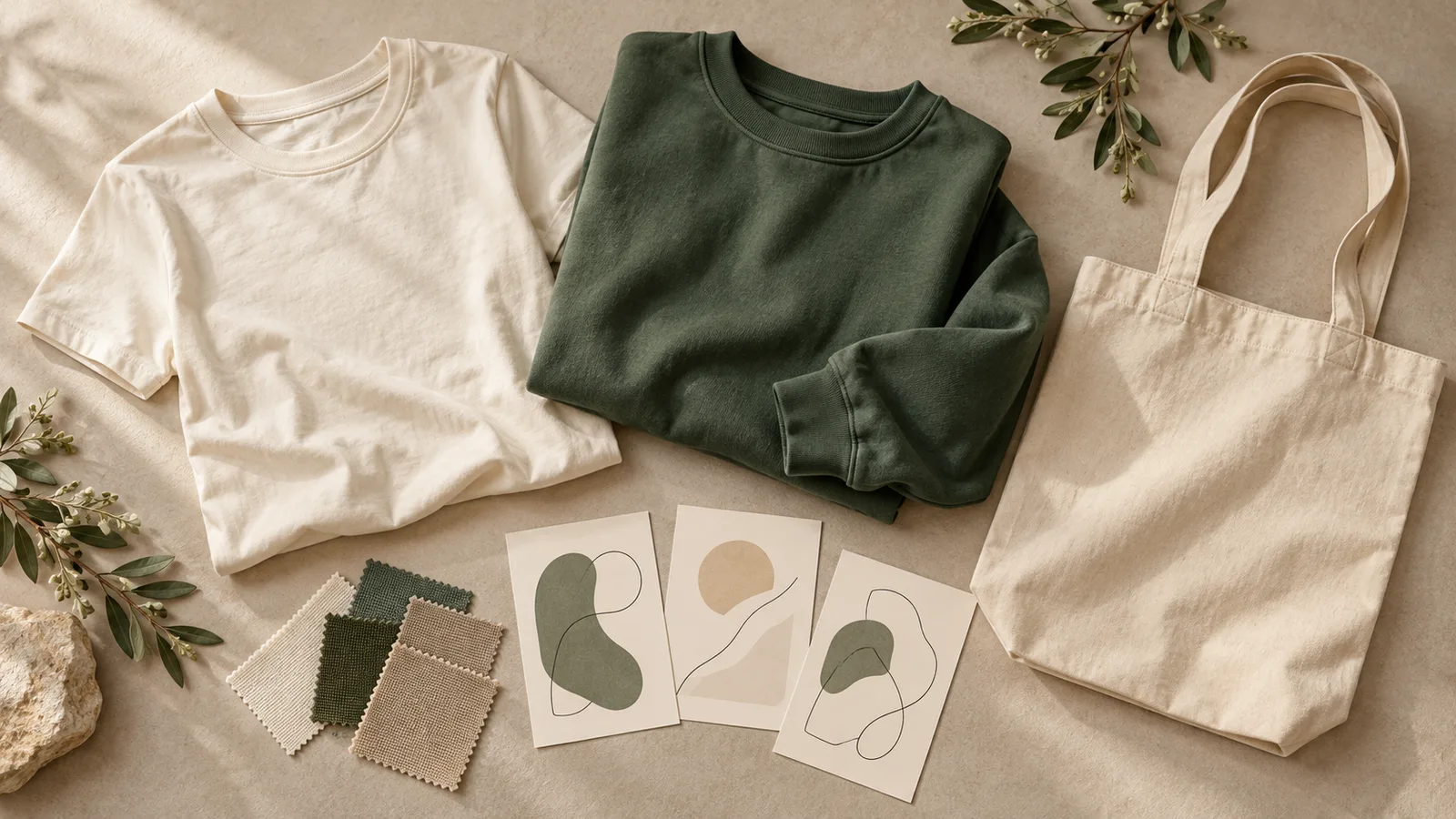
Your first collection does not need to fill pages of products. A smaller range is easier to explain, photograph, and check carefully. The important question is whether its pieces belong together. A capsule collection gives you a practical starting point: a deliberately limited range connected by a clear idea and a consistent visual approach.
Print on demand gives you room to explore different concepts, but each extra combination still creates work. Designs need checking, product pages need writing, and images need to match the right variants. A compact collection lets you spend that attention where it matters.
Give the collection one clear theme
Describe who the collection serves and what holds it together. “Quiet botanical illustrations for people who enjoy growing plants in small urban spaces” provides direction. A broad promise to make attractive products for everyone leaves most decisions unresolved.
Turn the idea into three practical design rules. You might choose simple line drawings, a limited natural colour palette, and restrained use of words. Apply these rules across the range. They help you recognise when a new design belongs and when it would be better saved for another project.
Put the concept on one page with a few original sketches and colour references. The purpose is to guide decisions, so keep the document useful and easy to revisit.
Give each item a reason to exist
Consider starting with one lead product and one or two supporting items. The lead product communicates the collection’s main idea. Supporting products should add a meaningful use or present the design in a different way.
For an illustrative gardening collection, you might explore a T-shirt with a larger drawing, a sweatshirt with a smaller detail, and an everyday tote. This is a planning example, not a ready-made recommendation for every audience. Check whether the people you want to reach would actually use that combination.
Review the collection as a group
Place all the concepts side by side and ask:
- Can someone recognise the shared theme without an explanation?
- Does each item add something useful?
- Does the artwork suit the shape and purpose of that product?
- Would each piece make sense as an individual purchase?
Use the Shirtee.Cloud product overview to explore relevant categories. For specific materials, variants, and decoration options, check the current information for each item you shortlist.
Keep your variant count manageable
Two designs in two colours and five sizes already create 20 variants for one garment style. Add more styles and the number grows quickly. Availability alone is not a good reason to include every colour.
Choose colours that support your visual idea, then inspect each design against each background. Fine details that look clear on a pale garment may become hard to see on a dark one. Make deliberate size-range decisions based on the actual product and your audience, and describe limitations clearly.
Keep a simple working list with the product, design, colour, size, and review status. Mark which combinations have artwork ready, which need a sample, and which have been checked in the shop. This prevents an unfinished variant from slipping into the launch.
Plan samples and product content together
Decide which samples you need before approving the collection. Look closely at the relationship between the chosen item, artwork scale, and placement. Be careful with claims about combinations you have not inspected yourself.
Then prepare the essentials for every product page: a clear name, relevant verified specifications, sizing guidance, appropriate care information, and images that represent the selected variant accurately. Use a consistent visual style so that different products still feel like part of the same collection.
If you want additional branding, include it in the plan early. Explore the Shirtee.Cloud branding options and confirm suitability, requirements, and current terms for your chosen products before finalising the artwork. Treat this as a separate decision with its own checks.
Decide what the launch should teach you
Choose two or three questions to investigate after launch. Which idea attracts useful product questions? Which colours are purchased? What information do customers repeatedly ask for? Record the answers by product rather than relying on a general impression of how the collection performed.
Low sales alone do not explain why an item struggled. It may have received little exposure, or its page may have left an important question unanswered. Review visibility and customer feedback before deciding whether to remove it or make another version.
Start with a range you can describe confidently and review thoroughly. Add products when they fill a clear gap. That gives your collection a practical route to grow while preserving the idea that made it recognisable in the first place.